Scope of work
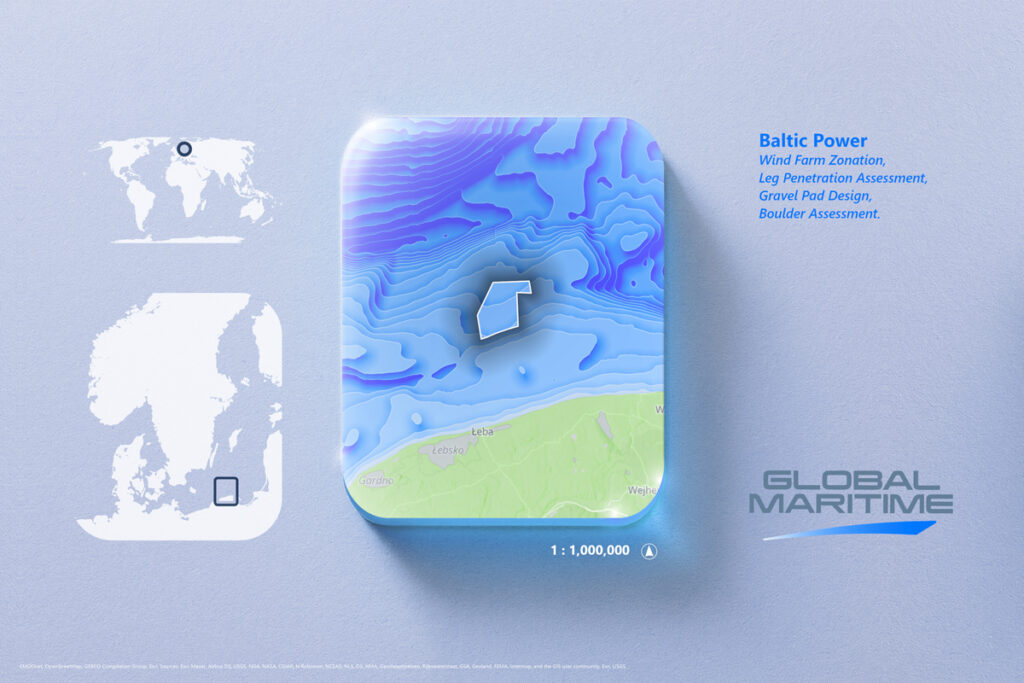
The scope involved the design of gravel pads to mitigate the risks associated with boulder–spudcan interaction during the jack-up operations of the Wind Turbine Installation Vessel (WTIV) at the Baltic Power OWF. Key activities included a detailed soil zonation to identify the most critical locations for leg penetration analysis, with a focus on the potential risk of encountering boulders. A series of 2D Finite Element Analyses (FEA) were conducted to optimise gravel pad dimensions and determine minimum thickness of the gravel pad required to limit spudcan-boulder interaction forces to those specified by the vessel operator. Additionally, scour analysis was carried out to establish grading requirements and performance specifications for the gravel materials to ensure long-term stability under operational and environmental loading conditions.
Challenges
- Current industry standards, guidelines, do not adequately account for boulder-induced risks, particularly in relation to leg tilt and localized pressure effects on spudcans.
- There are no established standards for designing rock berms or gravel pads specifically to mitigate boulder-related hazards during jack-up operations.
- Given the absence of defined criteria and the complex nature of spudcan–boulder interaction, it was necessary to undertake a detailed 2D Finite Element Analysis to investigate these effects.
Outcome – Results and Deliverables
An enhanced framework was developed to ensure that spudcan/boulder interaction risks were explicitly addressed in the gravel pad design process to optimize gravel pad dimensions and determine minimum thickness of the gravel pad required to limit spudcan-boulder interaction forces to those specified by the vessel operator. Final deliverables detailed the gravel pad dimensions and material specifications to ensure long-term stability under operational and environmental loading condition to support the safe and reliable operation of the Wind Turbine Installation Vessel (WTIV) at the site.